
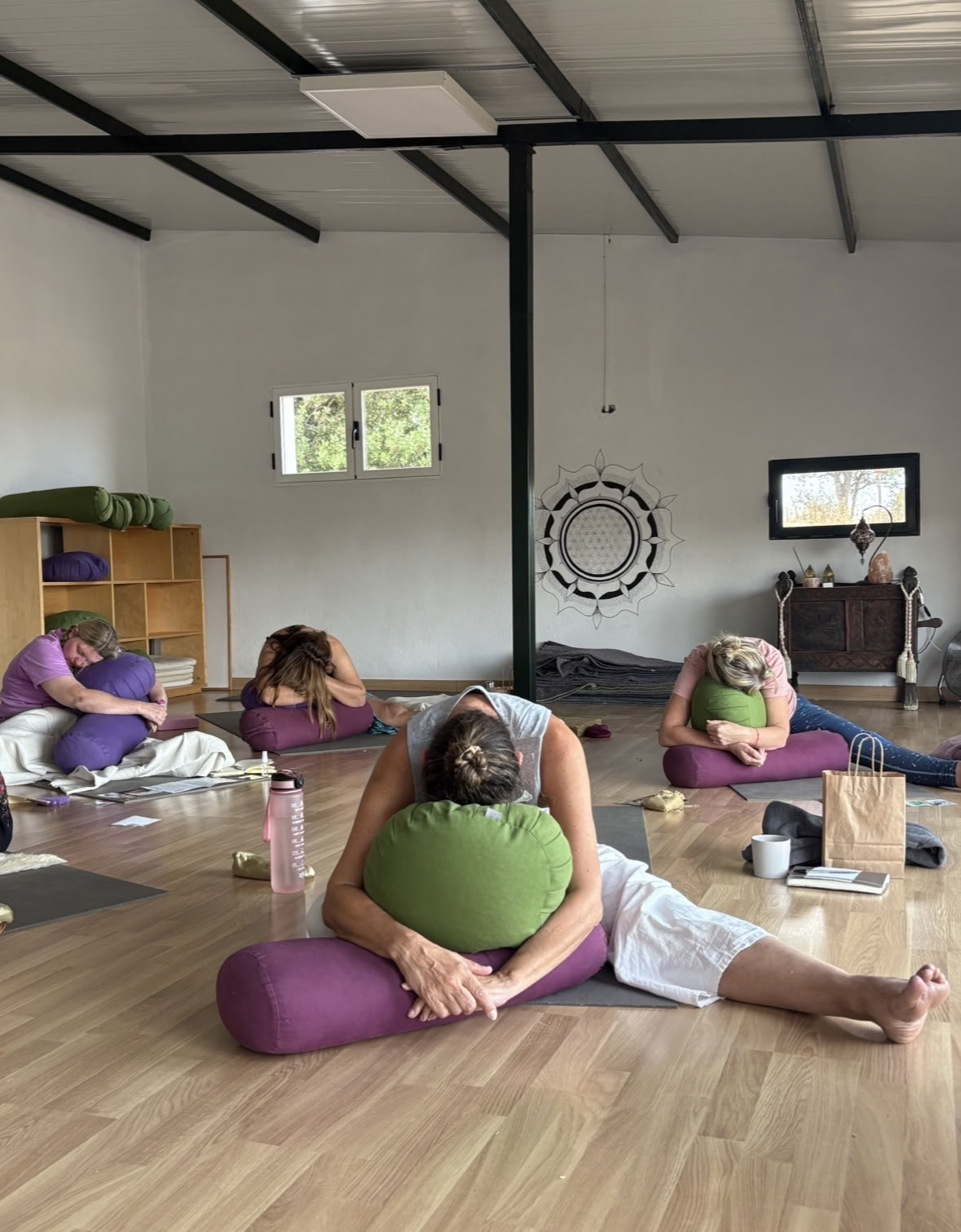

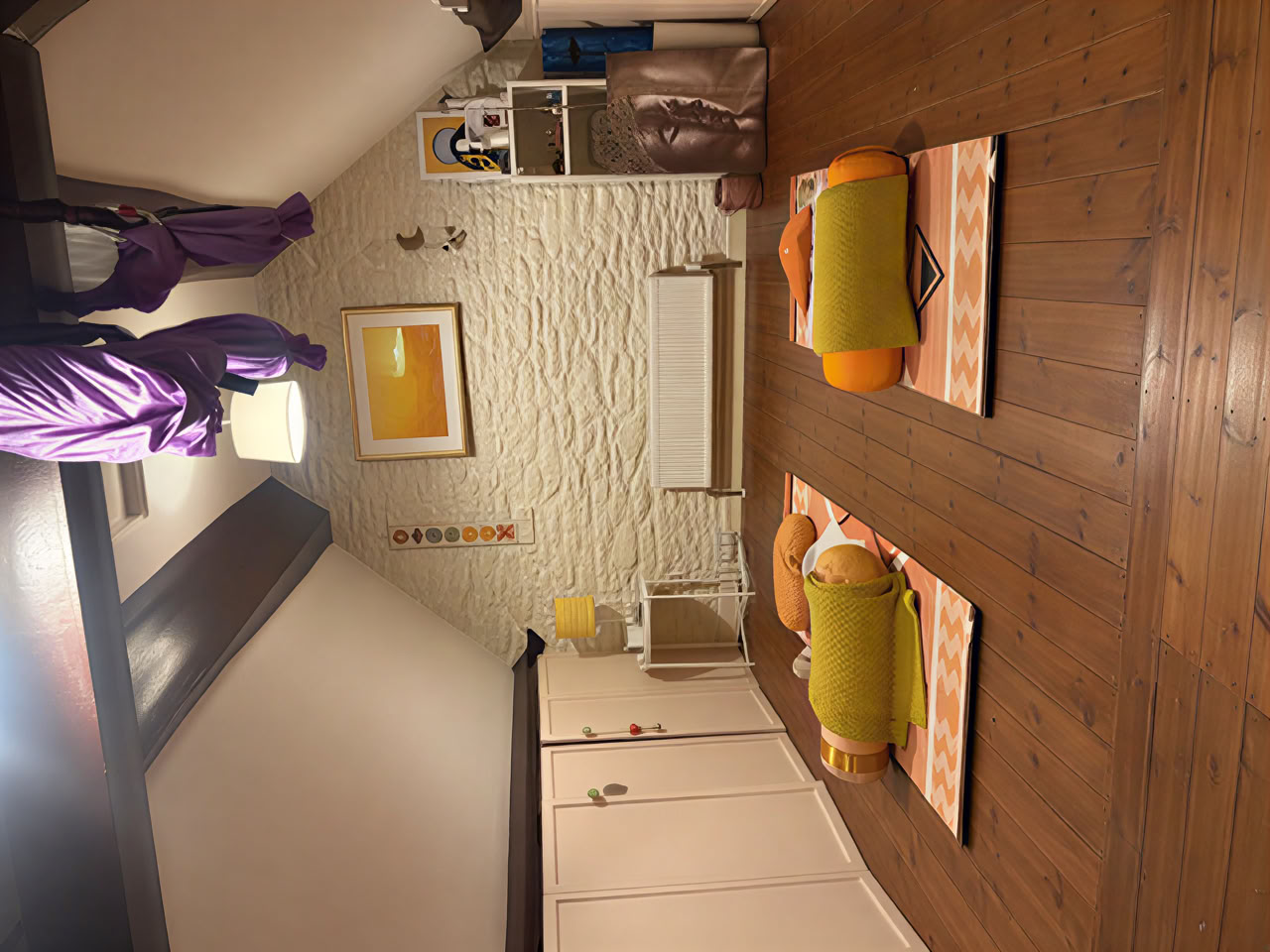
Yin yoga classes offer a slower, quieter, and more deeply restorative experience. In each session, poses are held for 3–5 minutes, giving the body time to gradually soften and release tension you may not even realise you’ve been carrying. If switching off feels difficult, this practice may be exactly what you need.
Unlike more movement-based styles, Yin is rooted in stillness. Rather than flowing from one posture to the next as in Hatha yoga, you settle into a shape, make it comfortable with bolsters and blocks, and remain there for three minutes, sometimes five.
These longer holds work more deeply into connective tissue than into muscles, reaching the fascia, ligaments, and the subtle areas around the joints that regular stretching often misses. The release is gradual, like ice melting slowly.
Yin is also a practice of the mind. Staying with discomfort, even mild discomfort, can reveal that you are capable of more than you thought. It reminds you that not everything needs to be resolved at once, and that sometimes the most supportive response is simply to breathe.
In an hour-long class, you may move through around 6–8 poses, far fewer than in Hatha yoga. Each posture is supported with props so you are not straining to hold yourself up. The intention is passive: you find the edge of the stretch and then allow the body to soften.
It is not always easy. Remaining still for that long can be challenging, especially in hip openers. The sensation should stay mild, however — a gentle pull rather than sharp pain. Guidance is provided throughout, and you are always welcome to come out of a pose if needed.
Warm clothing is recommended, as body temperature can drop when you are not moving. A blanket is also helpful, especially in winter. The room is kept warm, but layers can make the experience more comfortable.
After class, many people describe feeling as though they have had a massage — softer, looser, and calmer. Some feel pleasantly tired, like after a very good night’s sleep.
I’m not flexible at all — is this suitable for me?
Yes. Yin is not about achieving impressive shapes. Props are used to bring the floor closer to you, allowing you to work at your own level. In fact, people who feel naturally stiff often benefit greatly because they have the most to release.
Why are the poses held for so long?
Connective tissue responds differently from muscle. It needs sustained, gentle pressure over time to release. Think of bending a plastic ruler slowly rather than quickly — the slower approach creates lasting change without damage.
Can I combine Yin and Hatha yoga?
Absolutely. The two styles complement each other beautifully: Hatha yoga supports strength and active flexibility, while Yin offers deep release and stillness. Many people choose to do one of each per week.
Is Yin appropriate if I have an injury?
Often, yes, but it is important to share any concerns before class. Some poses may need to be modified, and in some cases certain positions may be skipped altogether. The slow pace allows for a careful and considered approach.
Ready to slow down?
If constant busyness is leaving you drained and you want a practice that genuinely helps you let go, Yin may be worth exploring.
Annelie Lily
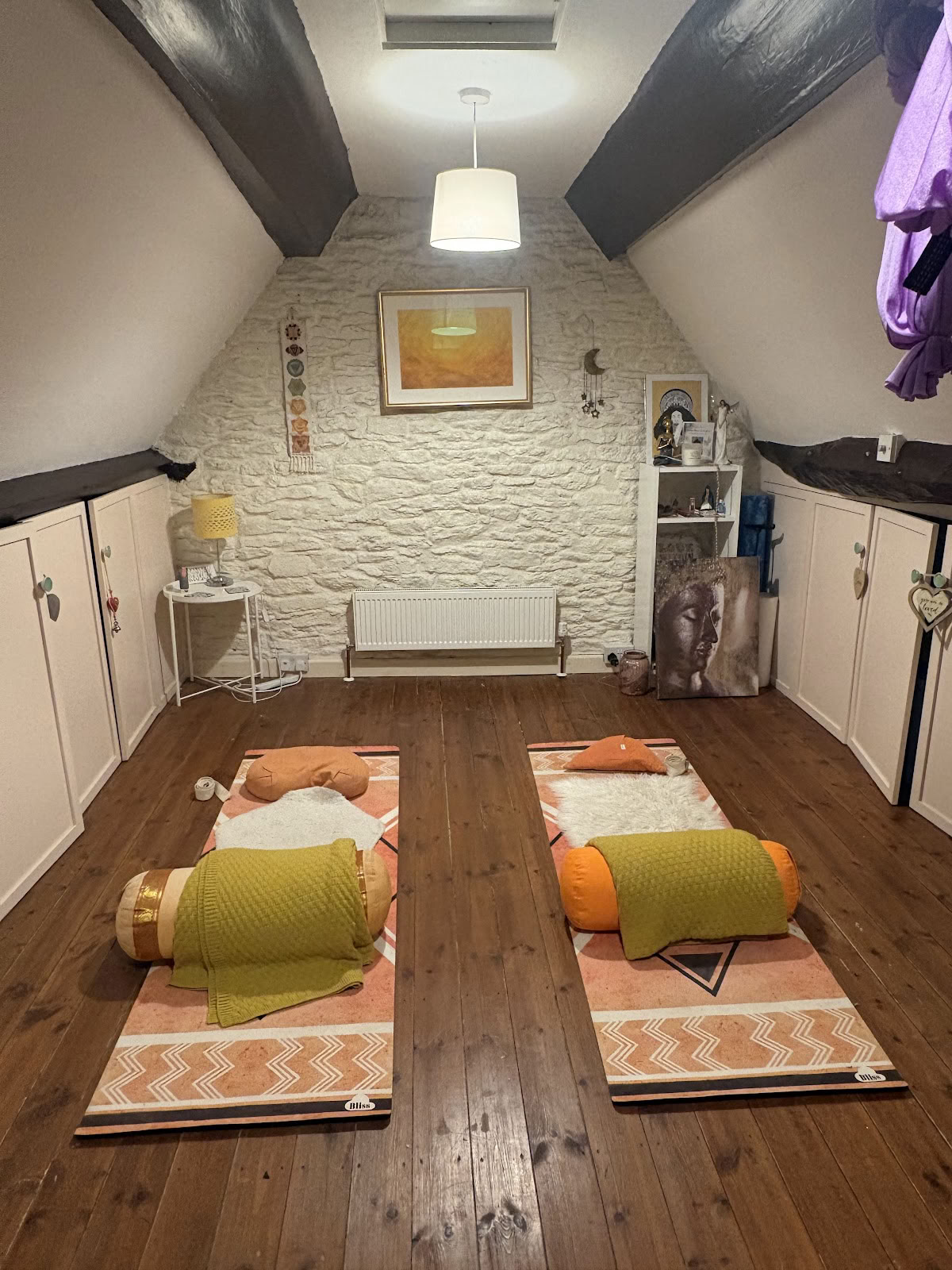
Price
On request
Please contact the organizer directly for pricing information