Ajahn Nisabho Bhikkhu
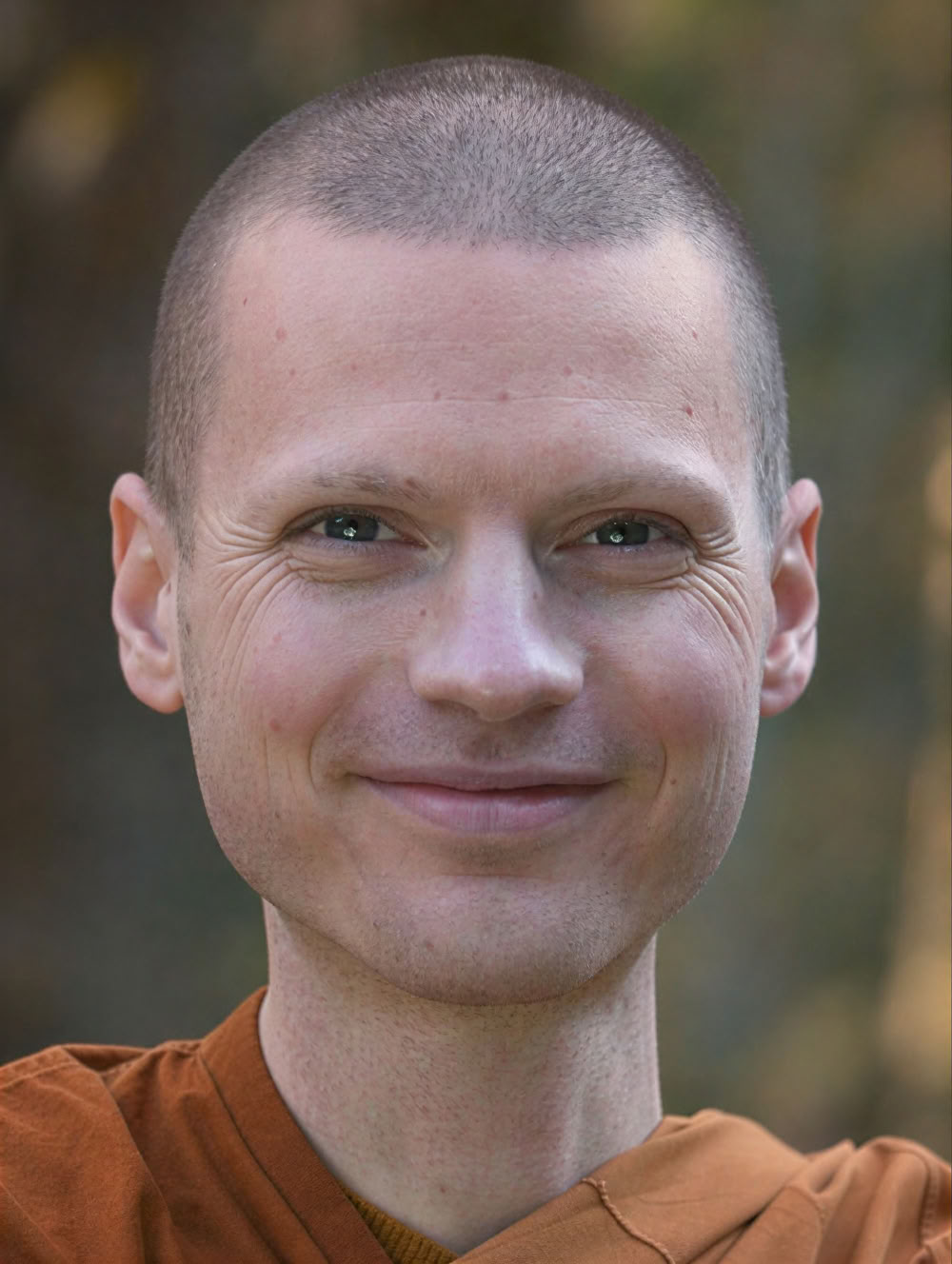
Description
About Ajahn Nisabho Bhikkhu
After graduating from college in 2012, Ven. Nisabho — known in the Thai tradition as Ajahn Nisabho — left his home state of Washington to ordain as a Buddhist monk in Thailand. He received full ordination the following spring under Ajahn Anan, a senior disciple of the well-known meditation master Ajahn Chah, and then spent the next several years training in forest monasteries across Thailand, Australia, and the US.
Through time spent with some of the lineage’s most respected teachers, he came to see the Thai Forest Tradition as a faithful expression of the original Buddhist path: a way that balances community life with solitude in the forest, follows the monastic precepts with care, and places meditation at the center. Encounters with contemporary masters such as Ajahn Anan, Ajahn Pasanno, and Ajahn Jayasaro also reinforced his conviction that this path can bear deep fruit in the heart, even in the midst of modern life.
Ajahn Nisabho currently lives just outside Seattle, where he relocated in 2021 to help establish Clear Mountain monastery.
Teaching Approach
Ajahn Nisabho’s Dhamma teaching is rooted in the early Pali texts and the Thai Forest masters. Rather than presenting samādhi, or concentration, as a narrow point of focus, he emphasizes a wider unification of mind that includes the body, subtle body, and breath.
Informed by contemporary teachers such as Ajahn Ṭhānissaro and Ajahn Sucitto, his approach uses the sixteen steps of the Ānāpānasati Sutta as a foundation and works with the thinking mind instead of pushing against it. He also highlights complementary practices including the Sound of Silence, loving-kindness, and insight meditation.