

ELW® explores the power of emotions — and why emotional intelligence can be just as important as intelligence and discipline when it comes to happiness and success. The way you relate to your own feelings and those of others often shapes the quality of your life. As psychologist Daniel Goleman explains, people with a high EQ tend to feel confident, pursue their goals, and adapt more easily to changing circumstances. He identifies five pillars of emotional intelligence: self-awareness, self-regulation, motivation, social skills, and empathy. While each of us develops these areas differently, we all have the ability to work on them actively.
Through ELW®, you are invited to discover how to bring this capacity into daily practice. Emotions can feel painful, inconvenient, or overwhelming, which is why we often try to suppress, avoid, or fight them. Yet they are a driving force in our lives and offer essential information about our inner state. They show us what we need and help us respond effectively in important moments.
Emotions also communicate what we feel and support connection with a partner through empathy. They are key to understanding expectations within relationships. Our emotional reactions are shaped by life experiences, and even deeply rooted negative feelings can change. Many uncomfortable emotions are learned in the past and may reflect painful childhood experiences. The encouraging truth is that our emotional experiences and responses can always be adjusted.
How do they work, and why are they so useful in everyday life?
Emotions:
Many emotional patterns were learned long ago. Negative experiences can leave an inner shadow that feels dark or frightening, sometimes representing someone from the past who caused pain. The good news is that emotional experiences and responses can always be transformed.
To understand emotions, it helps to first become familiar with their basic forms. Some energize us, while others calm us. The main basic emotions are:
As human beings, we often experience more unpleasant feelings than pleasant ones. From an evolutionary perspective, this helps us survive. Discomfort often increases when we resist emotions, and softens when we accept them. We may also experience many specific feelings, such as loneliness, irritation, or suspicion, all of which arise from these basic emotions. For example, suspicion is often fear, and loneliness is sadness.
Emotions do not always give us accurate information. Sometimes we distort what we feel in order to get what we want. At other times, we hide our true emotions behind a mask. If we act angry when we are actually sad, we may push others away instead of receiving comfort. A partner who listens with curiosity can help us recognize and heal our true sadness.
People who experienced a lot of fear in childhood often develop defensive mechanisms to avoid being hurt again. Everyone longs for safety and connection, but this theme becomes especially sensitive when early life was painful. By trusting a safe partner with your fear and allowing it, you can learn to guide and manage it more effectively. Fear can be transformed through compassion and conscious anger. You can stand up for yourself without driving others away, tolerate criticism, and seize the chance for connection even when you are afraid.
Becoming aware of your authentic emotions, including the painful ones, helps you function more fully. You can receive what you truly need, both from yourself and from others.
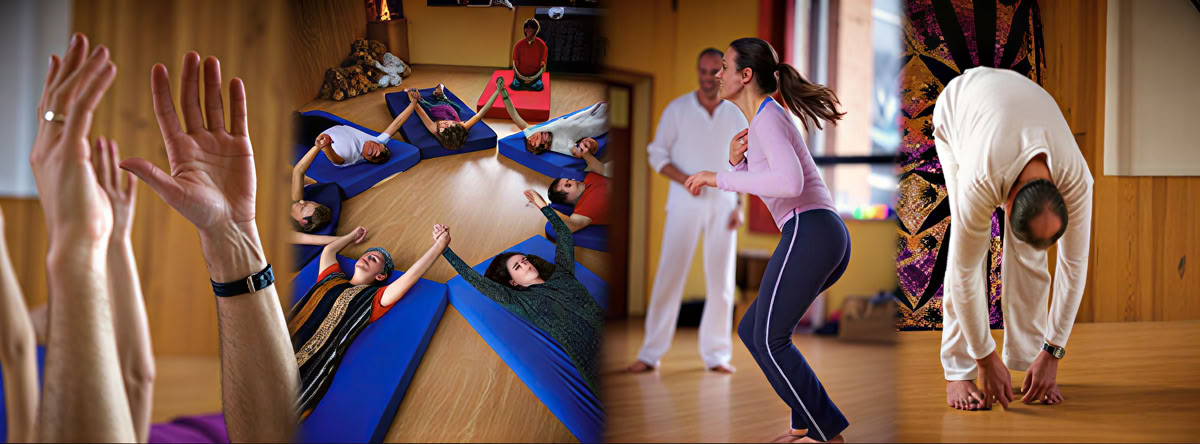
ELW® uses a three-part body map: Lower, Middle, and Upper. Modern lifestyles, sitting, limited movement, and stress often create imbalance. Tension shows up physically and emotionally. In the lower zone — feet, legs, and pelvis — the focus is safety and trust. In the middle zone — belly, heart, and breath — we work with love, warmth, and anger. In the upper zone — shoulders, neck, and head — we find creativity and the wish to be seen.
In Emotional Bodywork, you discover in a safe setting how you relate to your feelings. Suppression or overwhelm takes energy. Through movement, stuck emotions can begin to flow again. Intense breathing brings you into contact with what is alive within you, and sound gives it expression.
Your registration is only final after payment of a €45 deposit or the full amount of €125.
KMO-P Approved – ask about it!
Habraken / Erik