Annapurna circuit yoga trek


Description
Day 18 begins with one of the most memorable moments of the journey: an early-morning climb to Poon Hill. Leaving before dawn, around 4 am or earlier, allows enough time to reach the viewpoint for sunrise. The ascent from Ghorepani usually takes 45 minutes to an hour, depending on pace. Because the trail is dark and the air is cold, warm layers, a good jacket, and a headlamp or flashlight are essential.
At the top, the reward is a sweeping sunrise over the Annapurna and Dhaulagiri ranges. The first light often paints the snow-covered peaks in rich gold and soft color, creating an unforgettable panorama. It is also a good moment to pause, breathe, and simply take in the stillness. Some tea houses at the base may offer hot drinks, adding a little comfort before the descent.
After sunrise, there is time to explore the area around Poon Hill and enjoy the views from different angles before returning gradually to Ghorepani for breakfast. The trail then drops steeply to Tikhedhunga, passing through dense rhododendron and oak forest and the villages of Banthanti and Ulleri. The day closes with an evening yoga session, dinner, and rest, offering a peaceful way to recover after a full day on the trail.
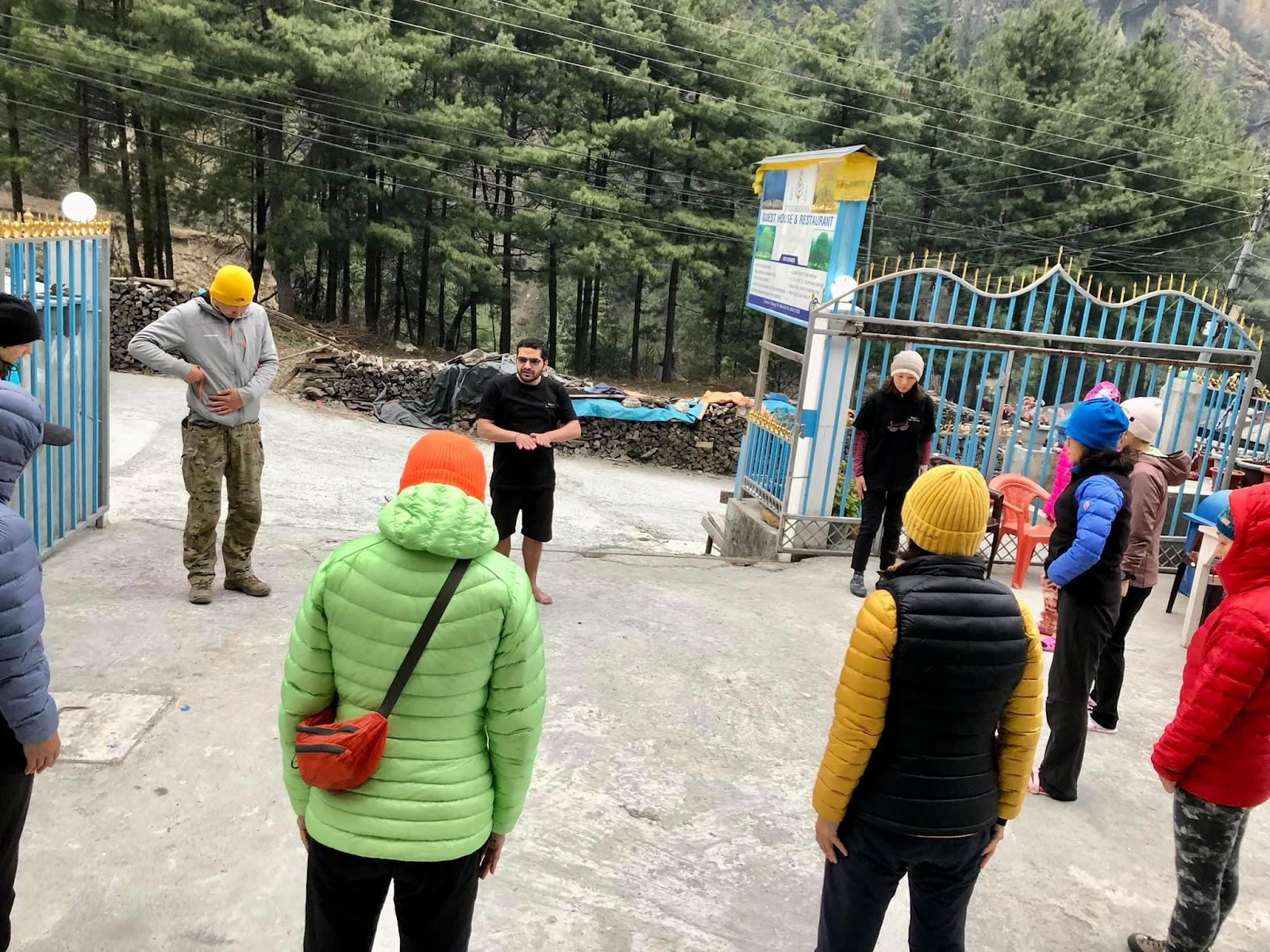
Day 19 starts with yoga and breathwork, helping prepare both body and mind for the trek ahead. After a nourishing breakfast, the route continues from Tikhedhunga to Nayapul. This section of the Annapurna Circuit is scenic and rewarding, with terraced fields, lush hillsides, and suspension bridges that add a touch of adventure along the way.
Villages such as Hile and Birethanti offer a chance to experience local culture and hospitality. The journey is as much about the landscape as it is about the people, and the changing scenery makes the walk especially memorable. After lunch in Nayapul, transfer to the hotel in Pokhara. Once there, check in and enjoy some well-deserved rest and guided relaxation.
Day 20 is departure day. From Pokhara, travelers may either return to Kathmandu by road, which usually takes 6-8 hours depending on road conditions, or by air, with a short 25-30 minute flight offering beautiful Himalayan views.
Costing for Annapurna circuit trekking:
- 1 pax: USD $1700 per person
- 2 pax: USD $1650 per person
- 3-4 pax: USD $1550 per person
- 5-7 pax: USD $1500 per person
- 8+ pax: USD $1400 per person
What’s included:
- Professional trekking guide cum yoga instructor for the trek
- Tourist bus transport (Kathmandu to Besishar & Pokhara to Kathmandu)
- Accommodation in Pokhara city inclusive breakfast
- Accommodation in Kathmandu city inclusive breakfast
- All airport and hotel transfers by private vehicle
- Accommodation in lodges/tea houses while on the trek (twin sharing)
- Full board meals during the trek with tea/breakfast (breakfast, lunch and dinner)
- All essential trekking permits and entrance fees
- All government and local taxes
- First aid medicine for the trek
- Company duffel bag and sleeping bag if needed
What’s not included:
- Tips to the guide and porter
- Nepal Travel Visa
- Any alcoholic beverages
- Wi-Fi, mineral bottled water, charging, and hot shower during the trek
- Porter for the trek
Travel logistics and best time:
The best seasons for the Annapurna Circuit are pre-monsoon (March to May) and post-monsoon (September to November), when weather conditions are generally stable and visibility is excellent. Spring is lively and busy, with pleasant temperatures and strong trekking energy. Summer brings warmer conditions but also monsoon rain, cloudy skies, slippery trails, and a higher risk of landslides. Autumn is the clearest and most popular season, while winter can be very cold, with night temperatures dropping to -15°C.
Travel begins at Tribhuvan International Airport in Kathmandu. One-way transfers are available for free. From Kathmandu, most travelers continue to Pokhara by domestic flight or tourist bus/private vehicle. The trek can then begin from Besisahar, or from Chame for those who want a shorter start to the route.
Teachers
Shree Yoga Retreat, Nepal
Place
Place map
Contact Information
Price
$1,400.00