
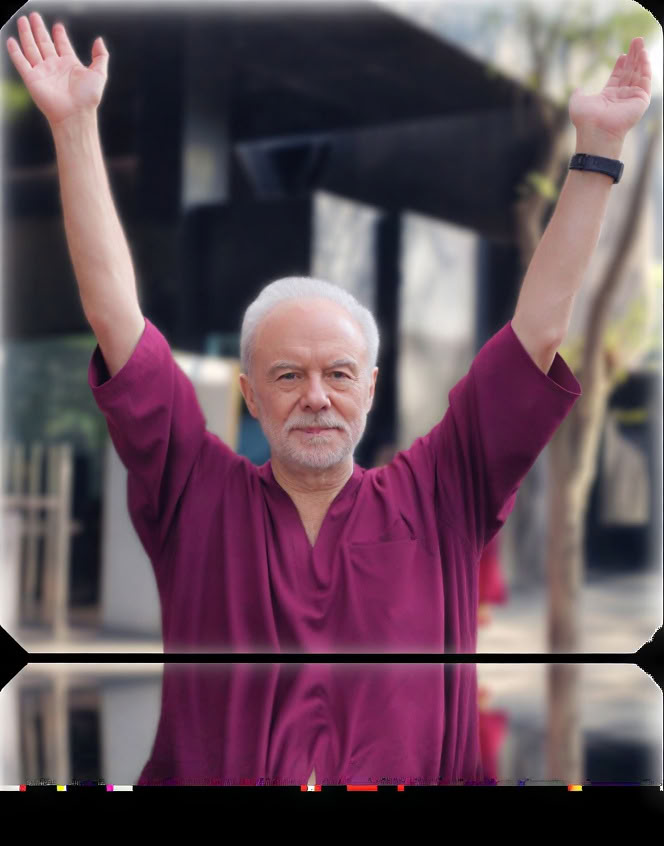
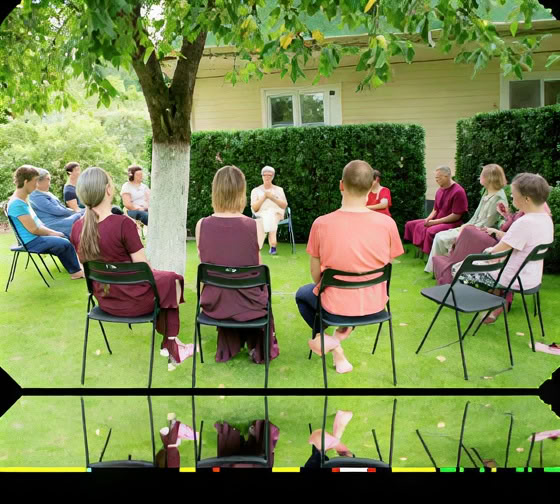
This is the third part of a three-part talk exploring why sexual thoughts, fantasies, and dreams can continue to arise even after someone has taken a lifelong vow of celibacy.
The perspective presented here is meditative rather than repressive. Sexuality, it suggests, does not need to be denied; its energy can be transformed into creation. A musician turns force into music, a dancer into dance, an artist into form. In this understanding, human beings are not here only to reproduce, but to bring forth something higher and more meaningful. The invitation is to move beyond the lower expressions, allowing energy to rise first into love and then, beyond love, into prayer.
Instead of fighting inner forces, the teaching calls for acceptance, joy, and transformation. Passion is described as the lowest form of sex, love as a higher stage, and prayer as the final shift. A meditative person, it is said, can make this transition without conflict and in harmony with all energies. At the center of this vision is creativity: music, poetry, art, pottery, sculpture, and any activity that gives birth to something new.
The text also takes a clear stand against repression and moral rigidity, rejecting traditions that suppress sexuality rather than understand it. The speaker values clarity and directness, preferring simple truth over polite phrasing or abstract morality.
A humorous anecdote follows about a sannyasin staying in a run-down hotel who is forced to share a room with a beautiful naked blonde. After repeated inner struggles, he finally gives up resisting and calmly eats the breakfast waiting in the room. The joke reveals the tension between suppression and simple acceptance.
A Zen story also appears, offered as a playful answer to the question of monks’ sex lives: “Well” — a wordplay that can mean both “none” and “nun.”
Returning to the heart of the teaching, sexual energy is not an enemy but a friend and a source of creativity. The text emphasizes that creativity itself is deeply sexual in nature. When an artist disappears into a painting or a dancer becomes one with the dance, a state of joy arises that is comparable to orgasm — often deeper, longer, and more complete. For this reason, dance and music are highlighted as natural, spontaneous ways to transform sexual energy.
Ultimately, the text invites us to meet sexuality with gratitude rather than rejection. In doing so, one becomes more creative, more alive, and more open to a fuller transformation of energy.
* Quote from Osho’s video talk I Am That. The excerpt was translated by the Ojas Meditation Center.
Meditacijos centras Ojas, Resortas / OJAS Meditation Center Resort

15165 Miškiniai, Lithuania
Miškiniai
Price
On request
Please contact the organizer directly for pricing information